
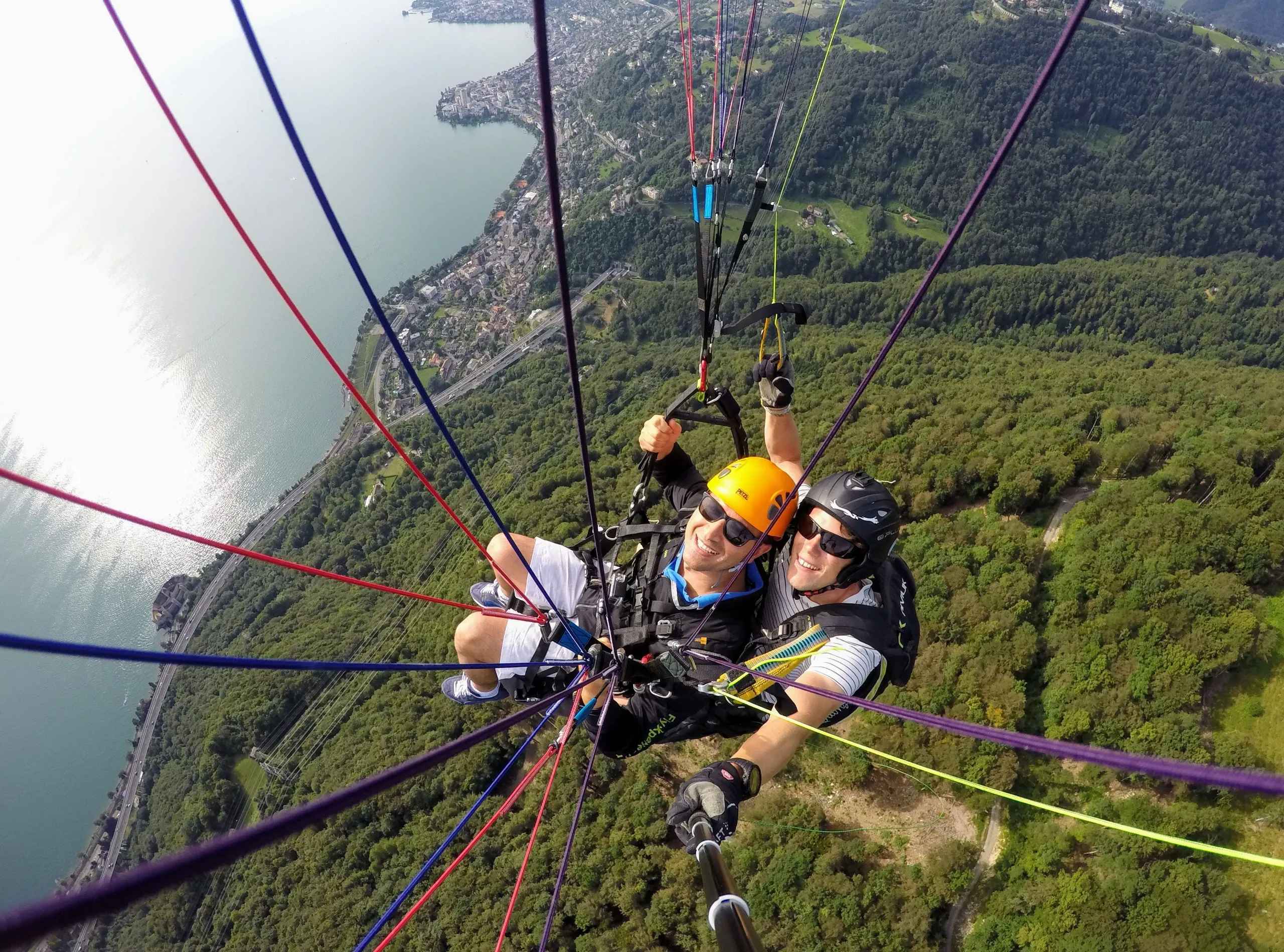
Booking a tandem paragliding flight is exciting, right up until you start wondering whether you actually qualify. Am I too old? Too young? Too unfit? These questions stop more people from booking than fear of heights does.
The good news is that tandem paragliding is built to be accessible. You don’t need a pilot’s licence, prior experience, or a particular body type. There are a few real requirements, though, and it’s worth knowing them before you book.
Age Requirements for Tandem Paragliding
AirVentures requires all passengers to be over 14 years of age. This applies across every flight, regardless of experience or size, and it’s a standard age threshold used throughout the paragliding industry.
There’s no upper age limit. If you’re fit enough to walk and follow simple instructions during take-off, age alone won’t stop you from flying. Plenty of older adults fly tandem without any issue.
Weight Guidelines for Tandem Flights
Weight matters in paragliding because it affects how the wing performs in the air. Operators calculate a safe passenger weight range based on the combined weight of the pilot, the passenger, the harness and the wing itself, then check that total against what the equipment is rated to carry.
Across the tandem paragliding industry, that typically works out to a passenger range of roughly 25 kg to 105 kg, though the exact figure depends on the specific wing, the pilot’s own weight, and conditions on the day. Because these limits shift with equipment and weather, it’s worth confirming your specific weight against the day’s conditions directly with AirVentures when you book, rather than assuming a fixed number applies.
Do You Need to Be Fit to Paraglide?
Not particularly. Tandem paragliding puts almost no physical demand on the passenger. Your pilot controls the wing for the entire flight, from launch to landing, so you’re not required to have any paragliding skill, strength or flexibility.
The one physical moment that matters is the launch. You’ll need to run a short distance alongside your pilot to get the wing airborne, so a basic level of mobility helps. Once you’re in the air, you can simply sit back in the harness and take in the view.
Health Conditions to Consider Before You Fly
Certain conditions are worth thinking through before you book:
- Pregnancy. The G-forces during launch, turns and landing aren’t considered suitable during pregnancy. Most operators will ask you to reschedule for after the birth.
- Heart or spinal conditions. If you have a cardiovascular condition, a recent injury, or a spinal issue, speak to your doctor before booking. The landing involves a small jolt, and turns during flight create some G-force.
- Mobility limitations. Many passengers with limited mobility fly successfully, but the specific accommodation depends on the condition. It’s best to call ahead and describe your situation so AirVentures can plan for it.
If you’re at all unsure, a quick call before you book is the simplest way to get a straight answer.
The Safety Standards Behind These Requirements
These aren’t arbitrary rules. AirVentures operates under the South African Hang Gliding and Paragliding Association (SAHPA) and South Africa’s Civil Aviation Authority (CAA), both of which set standards for how tandem flights are assessed and conducted. You can read more about the team and their experience on the AirVentures About Us page.
Weather also plays its own role in what’s safe on any given day, on top of age, weight and fitness. If you want to understand how wind conditions factor into flight decisions, our guide on how windy is too windy for tandem paragliding covers that in detail.
If you meet the age requirement and you’re within a reasonable weight range, there’s a good chance you’re ready to fly. Book your tandem paragliding flight with AirVentures today, or contact us first if you’d like to double-check your eligibility before you commit.